Industry
Web 3.0 - Crypto wallet
Client
MetaMask
My role
Sr Product Designer
Other work
When I joined MetaMask in 2021, the ecosystem was evolving at lightning speed. User adoption was accelerating beyond expectations, bringing both exciting opportunities and new challenges. During this time, I worked across a range of projects aimed at supporting product growth, improving user experience, and building safeguards to protect users from scams. A key part of my role involved designing with education and security in mind, helping users navigate the rapidly expanding web3 landscape with greater confidence.
Impact
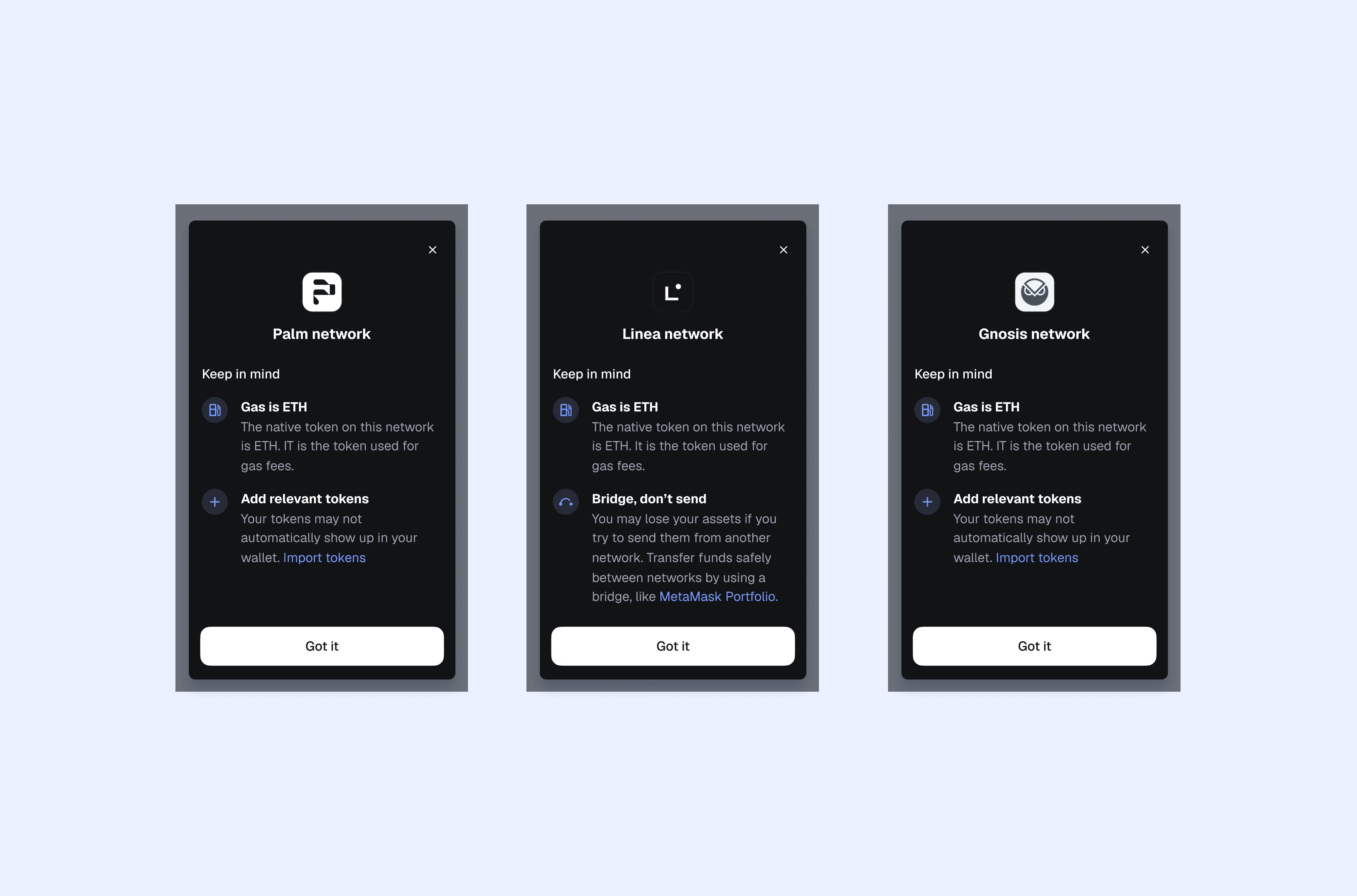
Introduced educational modals that were displayed when a user first switched to a new network to provide information in context.
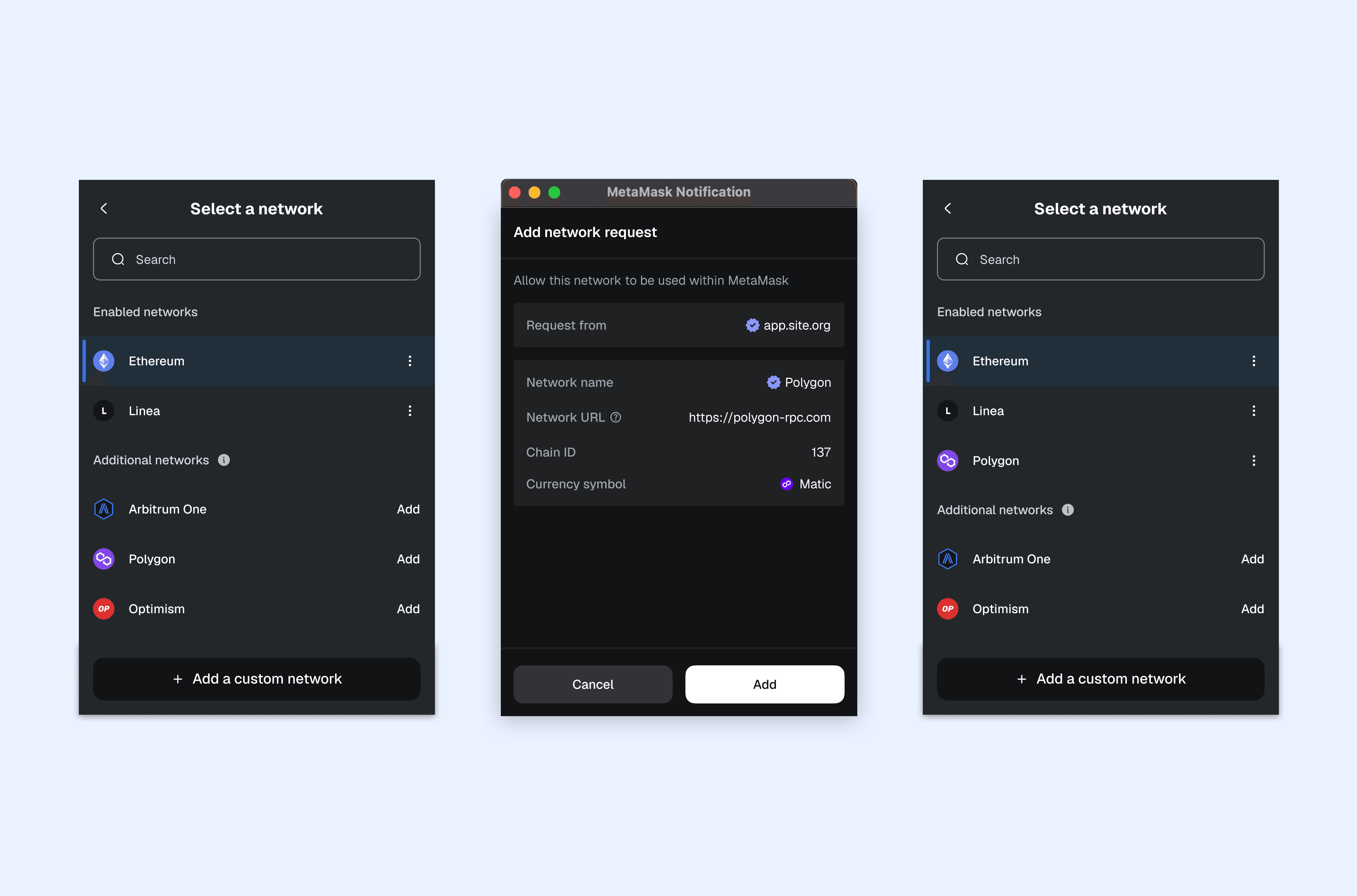
Showied the network details before users added the network, we could alert users to any discrepancies found.
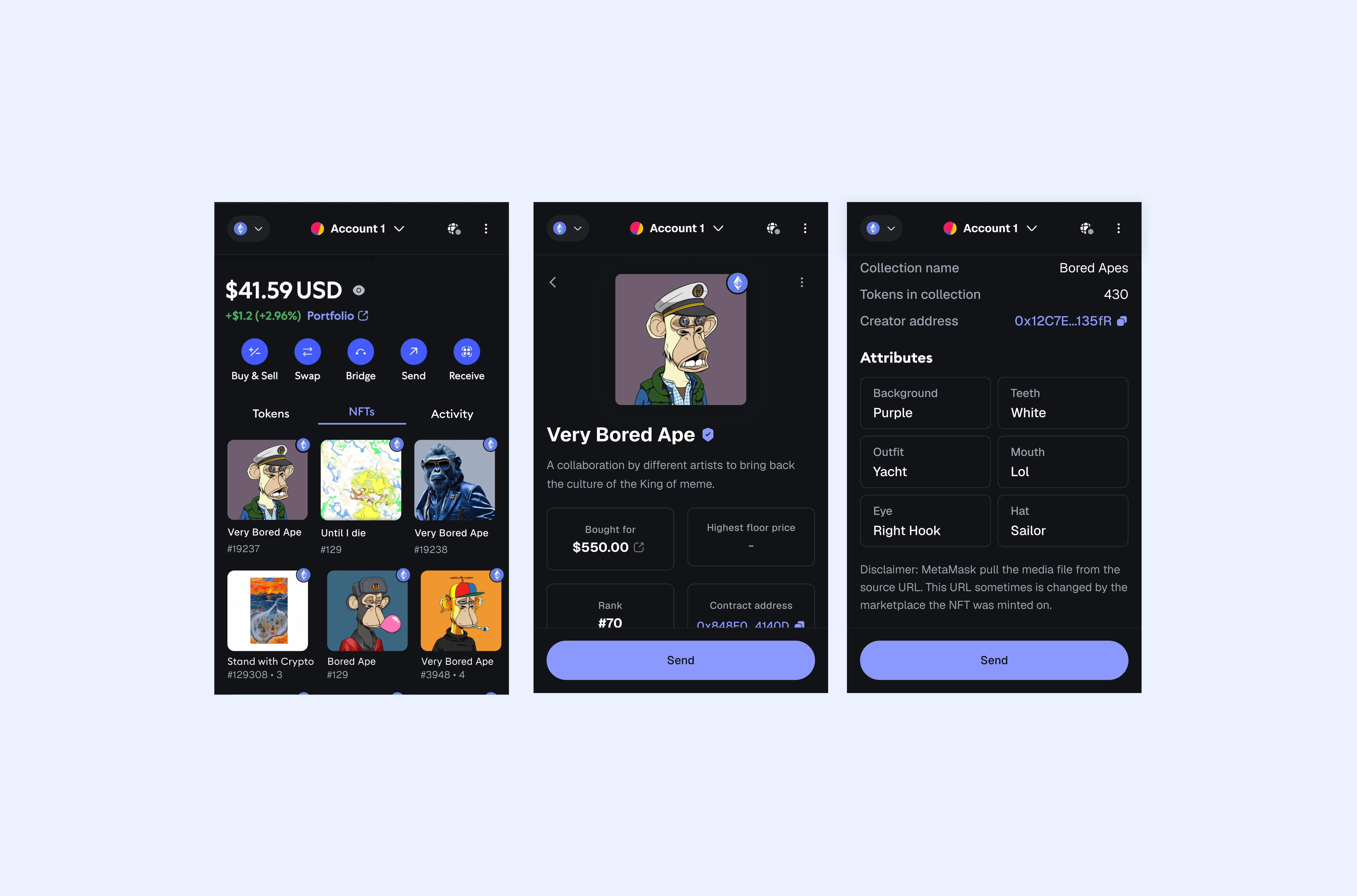
Offered NFT support on extension
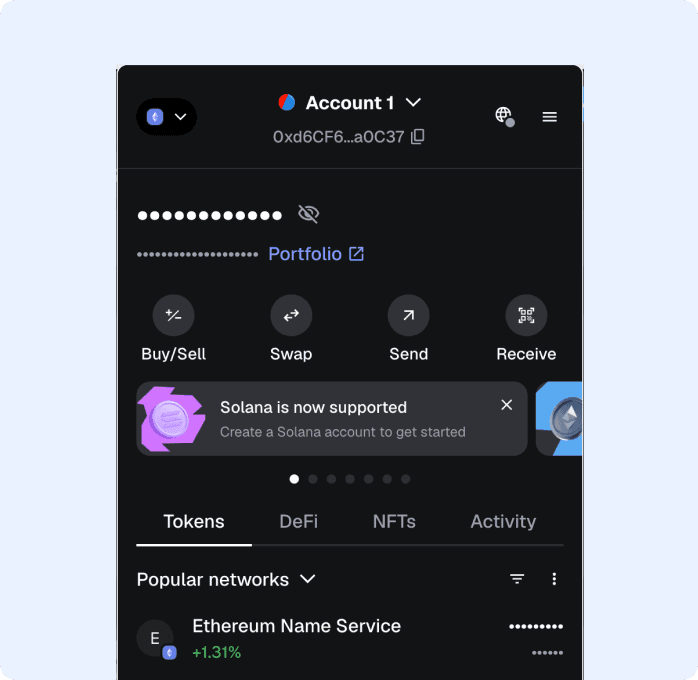
Introduced balance privacy
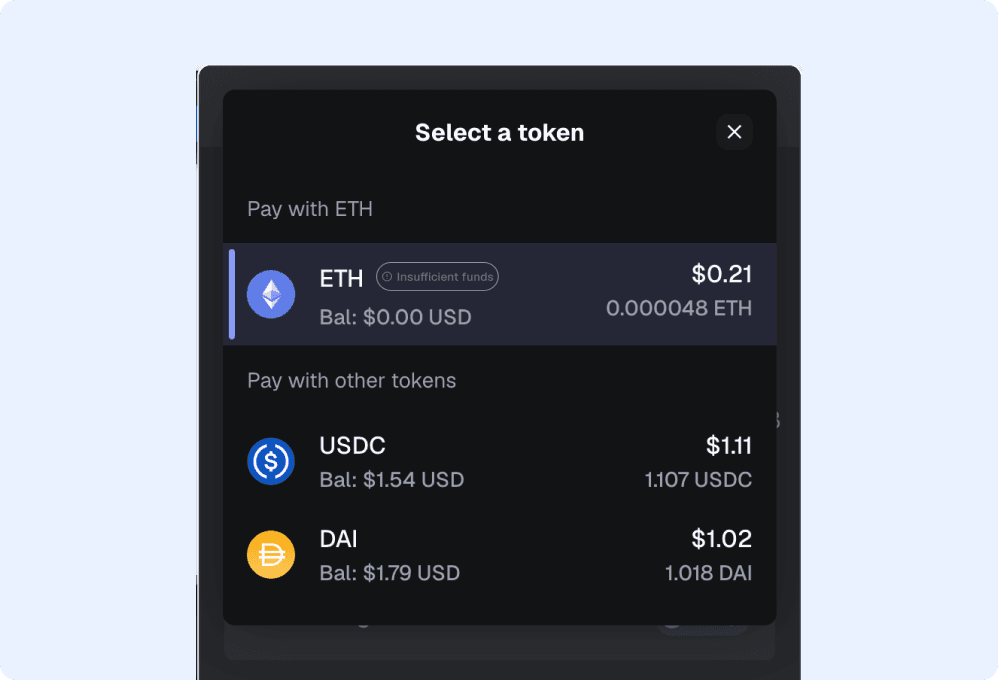
Introduced "Pay with other token" to let users pay network fee with any token.
Educating users about network specific assets
Back in 2021, we noticed an increase in user complaints about lost assets. This quickly highlighted a gap in awareness around network-specific behavior and assets. To better understand users' mental models when transferring assets and navigating between networks, we conducted a focused research study. Our findings revealed that many users were unaware of how different networks functioned. They often didn’t realize which tokens were required for network fees, that assets couldn’t be sent directly across incompatible networks, or how easily they could fall victim to scams or lose funds during transfers. In response, we introduced contextual "educational" modals that appeared when users switched to a new network for the first time. These modals explained critical concepts like native tokens required for gas fees, how to bridge assets between networks, and how to import relevant tokens. By surfacing this information in-context, we significantly improved user understanding and reduced asset loss incidents.